
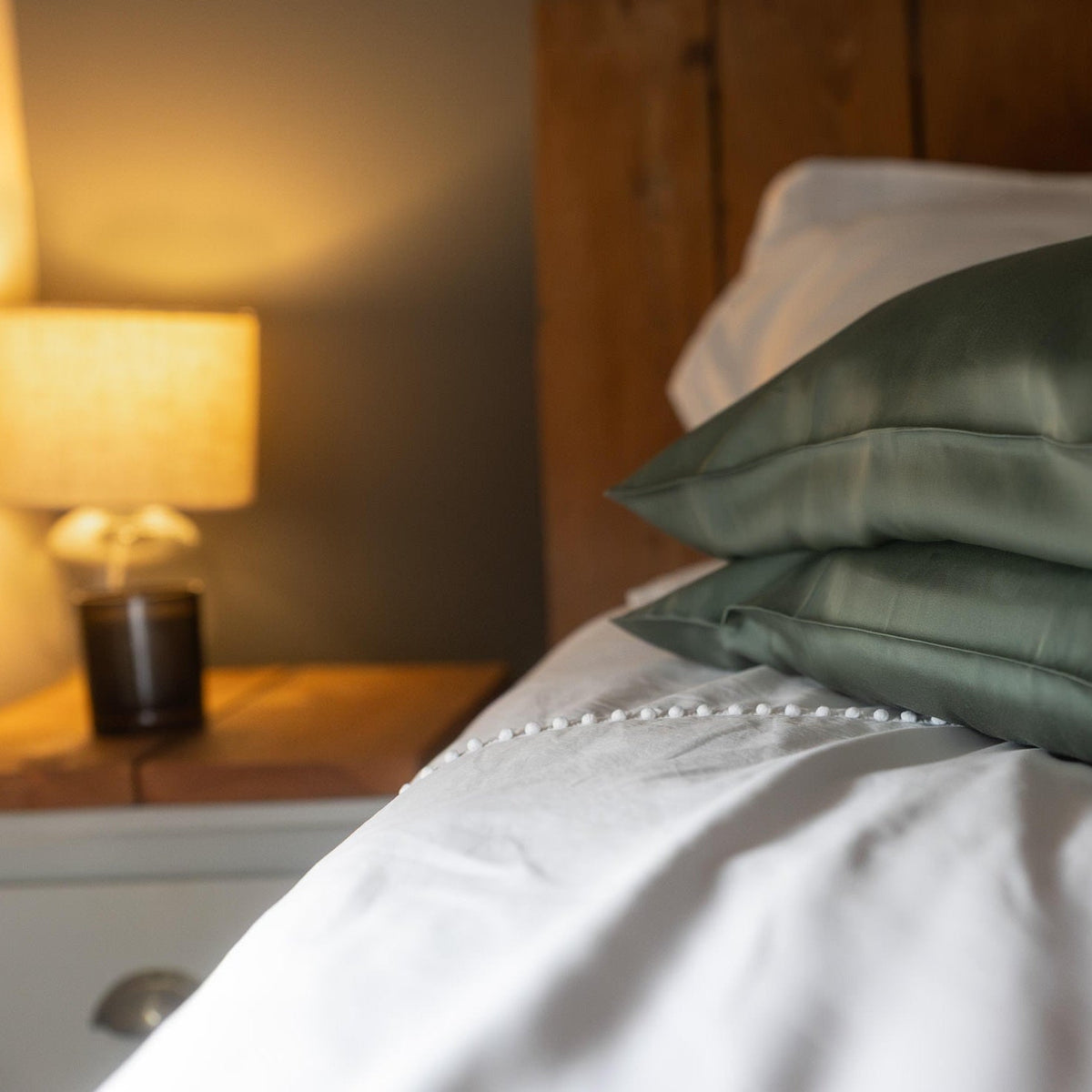
Quick answer: To make a bedroom dark enough for daytime sleep, work in layers. Start with blackout blinds or curtains that reach well beyond the window frame, then seal the gaps at the top, sides and bottom. Cover any standby lights and block the gap under the door. Finally, wear a contoured sleep mask, like the Dream & Drift Drift Away, to catch whatever still gets through. No single product will make a room pitch black on a sunny morning, but layering gets you very close.
We're James and Larissa, and we've spent ten years working shifts in the emergency services. We've both tried to sleep in rooms where one thin strip of sunlight across the ceiling felt like a floodlight. If you've been there too, you'll know how frustrating it is when you're shattered and the room just won't cooperate. What we learned, slowly, is that darkness isn't one purchase. It's a handful of small fixes, and most of them are cheap. This is the order we'd tackle them in, and it's the thinking behind a lot of what we stock at Dream & Drift.
Why does darkness matter so much for daytime sleep?
Light is the strongest signal your body clock gets. Daylight tells it to be awake, so trying to sleep in a bright room means you're working against your own biology. That's why NHS staff guidance for night workers puts blocking out daylight with blackout curtains, blinds or a sleep mask near the top of its advice, and why the Sleep Foundation recommends a dark, cool and quiet room for sleeping in the day.
How dark is dark enough?
Here's a simple test. Get into bed at the time you'd normally sleep, give your eyes a minute to adjust, then hold your hand out at arm's length. If you can clearly see your fingers, light's getting in.
Now look around the room and spot where it's coming from. That tells you which of the steps below to start with.
Step 1: Fix the window
- Blackout roller blinds stop most of the light coming through the glass, but they usually leak at the sides.
- Blackout curtains work best when they're wider and longer than the window, hung from a pole or track that sits well above and beyond the frame.
- Both together is the most effective option for most rooms. The blind covers the glass and the curtain covers the edges.
- Fitted blinds with side channels seal the edges of the blind itself. Worth a look if you're on nights for the long haul.
Step 2: Seal the gaps most people miss
This is where most bedrooms fall down. You can have great curtains and still wake up to a bright line across the room.
- The top of the curtain. Light often spills over the pole and onto the ceiling. A pelmet, a wrap-around pole, or hanging the curtains closer to the ceiling sorts it.
- The sides. Let curtains overlap the wall generously, or fix the edges down with hook and loop tape.
- The bottom. Curtains that stop short leave a glowing strip on the floor. Longer ones help.
- The door. A bright landing sneaks in underneath. A simple draught excluder blocks it.
- Skylights and roof windows. These need their own fitted blackout blind.
Step 3: Deal with the light inside the room
Once the windows are sorted, you'll suddenly notice all the little lights. Cover standby lights on TVs and chargers with light-blocking stickers or a bit of tape, turn your phone face down, and choose a bedside clock you can dim. The Rise & Reset clock has a dimmable display for exactly this reason.
Step 4: Add a sleep mask as the final layer
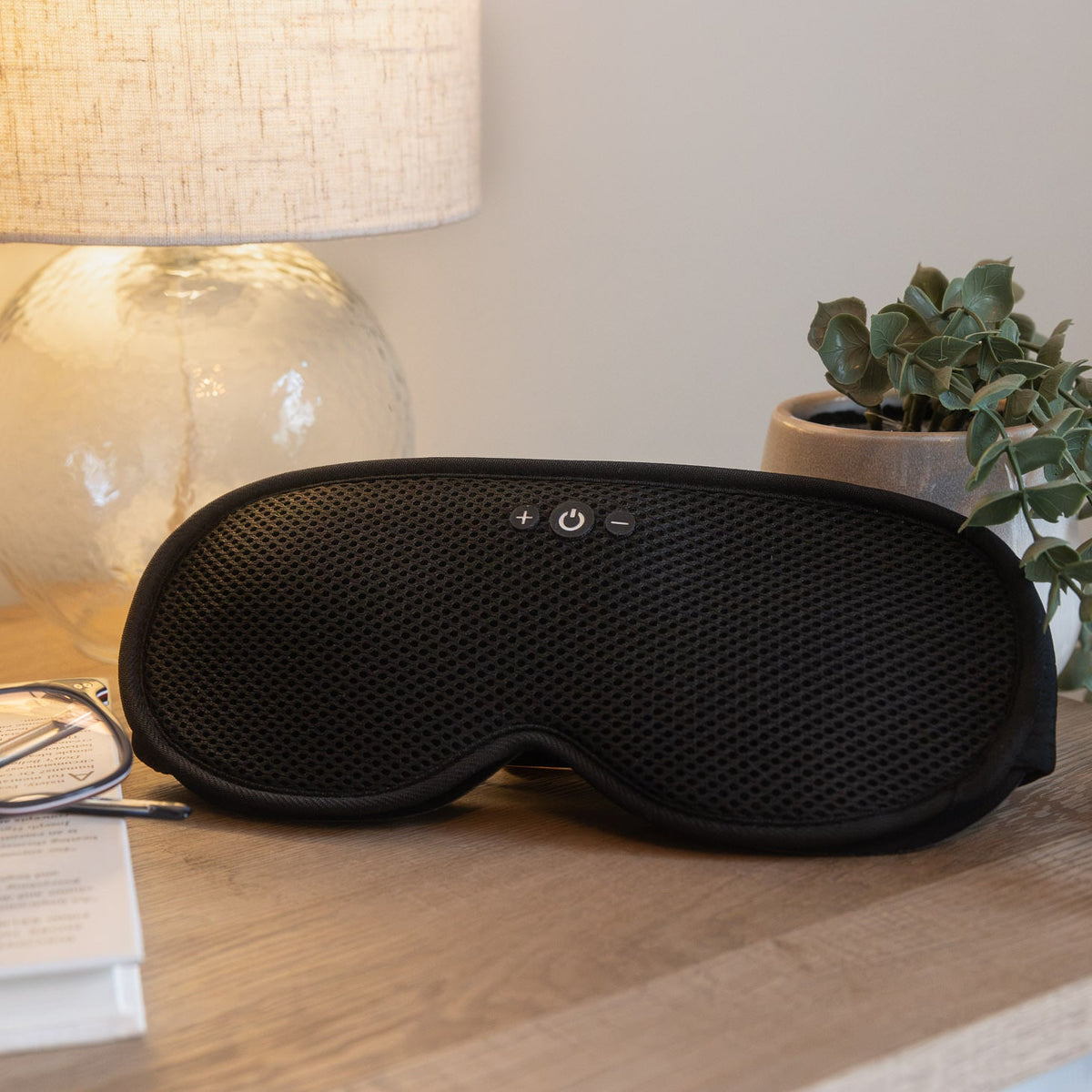
Even a well blacked-out room leaks a bit of light on a bright day. A sleep mask can help you sleep during the day because it makes darkness right at your eyes, whatever's going on at the window. Look for contoured eye cups and a shaped nose area. They block light far more closely than a flat mask.
Here are the two we'd point you towards from the Dream & Drift range:
- Drift Away Bluetooth Sleep Mask (£34.99): a full-coverage contoured design with built-in speakers, so you can play gentle sound to soften daytime noise too. We go into more detail in are Bluetooth sleep masks worth it?
- Clocked Off Mulberry Silk Sleep Set (from £54.99): a lighter silk mask with a matching pillowcase and scrunchie, for anyone who prefers something that barely feels like it's there.

Best for: anyone whose room still isn't quite dark enough, or who sleeps somewhere they can't change the windows.
Worth knowing: a mask works best as the last layer, not the only one. You'll still want the room as dark as you can get it for when you take it off.
Prices correct at the time of writing.
Step 5: Control the light before you get into bed
Darkness starts before your head hits the pillow. Bright sunshine on the way home and the kitchen spotlights while you make toast both keep your body in daytime mode.
- Wear sunglasses on the way home after a night shift, as shift work guidance suggests.
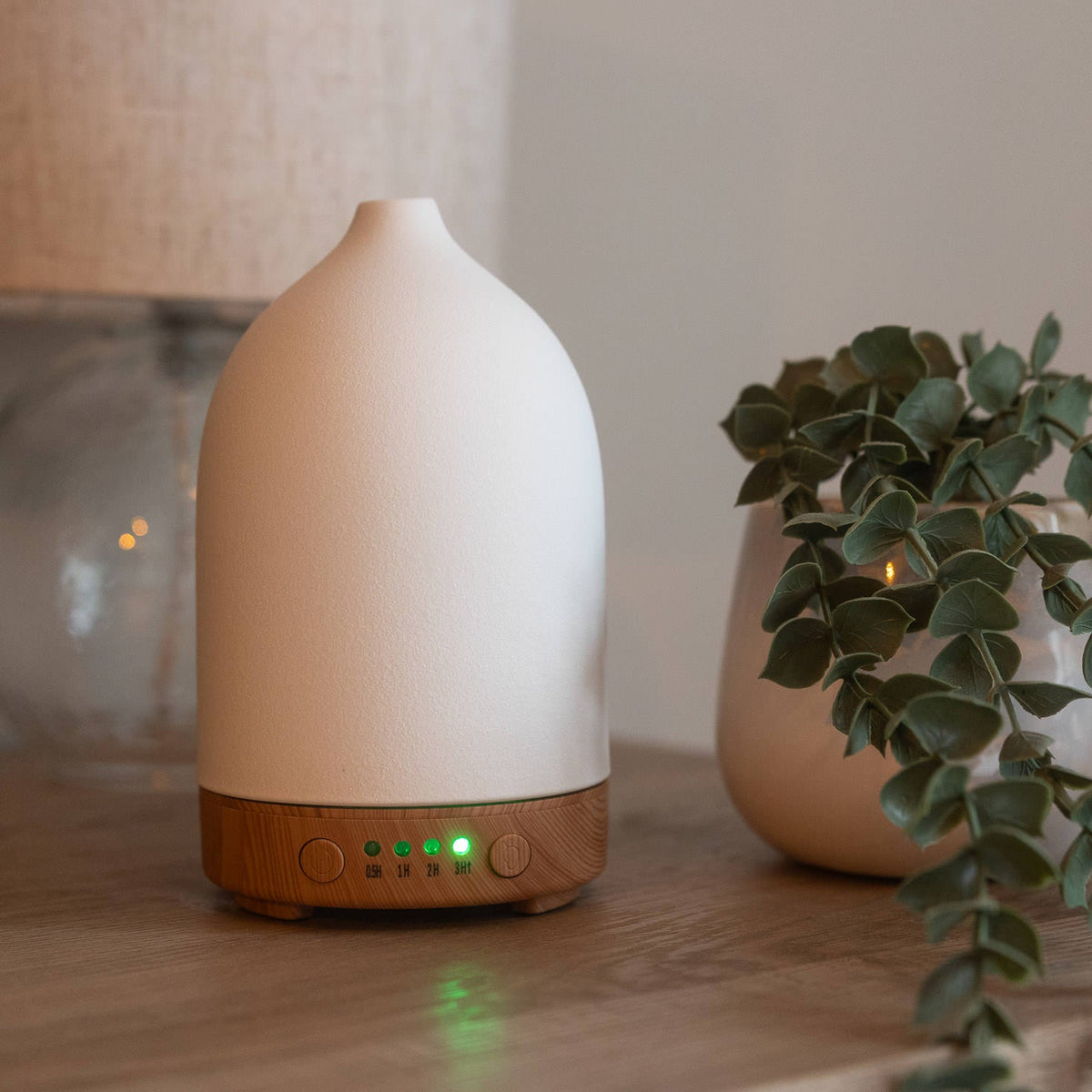
- Keep the lighting low and warm while you wind down. NHS guidance recommends dim lighting to signal night-time. The warm bedside light on Rise & Reset or the soft glow of the Slow Hours Diffuser is much kinder than the big ceiling light.
How can I black out a bedroom on a budget?
You don't need to spend much to make a real difference. Start at the top of this table and work down only if you need to.
| Budget | What to do |
|---|---|
| Almost free | Light-blocking stickers on standby lights, a towel or draught excluder under the door, phone face down |
| Low | A contoured sleep mask, temporary blackout film or suction blinds, hook and loop tape on curtain edges |
| Medium | Wide, full-length blackout curtains on a pole that reaches past the frame |
| Higher | Made-to-measure blackout blinds with side channels, plus curtains |
What if I'm renting?
If you can't drill or fit blinds, don't worry. Temporary blackout blinds that stick to the glass with suction cups, static-cling blackout film, a tension rod inside the window recess and a good sleep mask will all make a big difference. And they all come down without a trace when you move out.
Does it get harder in summer?
Yes, and it's worth planning for. In a UK summer the sun can be up before 5am, so after a night shift it's already bright when you get home and it stays that way all day. Light finds every gap, and a sunny bedroom warms up fast too. Blackout curtains with a thermal lining help with both. Close them before you leave for your shift, so the room stays cooler and darker for when you get back.
Don't forget to let the light back in
A dark bedroom is for sleeping. When you get up, open the blinds and get some daylight on your face. It helps your body tell the difference between sleep time and awake time, which matters even more when your rota keeps changing. For the full routine, have a read of our guide on how to sleep during the day after a night shift.
Frequently asked questions
How do I make my bedroom completely dark during the day?
Layer your fixes: blackout blinds and curtains that reach past the window frame, sealed gaps at the top, sides and bottom, covered standby lights, a draught excluder under the door and a sleep mask as the final layer.
Are blackout blinds enough on their own?
Usually not. Most blackout roller blinds leak light around the edges. Pairing them with blackout curtains or a sleep mask makes a big difference.
Is a sleep mask better than blackout curtains?
They do different jobs. Curtains darken the whole room, while a sleep mask blocks the light that still gets through. For daytime sleep, using both works best.
How can I black out a room cheaply?
Start with a contoured sleep mask, light-blocking stickers on standby lights, a towel or draught excluder under the door and temporary suction blackout blinds.
How can I black out a rented bedroom?
Use options that leave no marks: suction-cup blackout blinds, static-cling film, a tension rod with blackout curtains inside the recess, and a sleep mask.
What sleep masks does Dream & Drift recommend for daytime sleep?
For most daytime sleepers we suggest the Drift Away Bluetooth Sleep Mask, which has contoured eye cups and built-in speakers. If you'd prefer something lighter, the silk mask in the Clocked Off Mulberry Silk Sleep Set is a softer option.
About the authors
James and Larissa are the founders of Dream & Drift. After ten years of shift work in the emergency services, they built Dream and Drift around practical sleep essentials for people whose rest doesn't always happen at night. Better rest, on your terms.
Dream & Drift products are general sleep accessories and are not intended to diagnose, treat or prevent any medical condition. If sleep problems persist, speak to your GP.


Leave a comment
This site is protected by hCaptcha and the hCaptcha Privacy Policy and Terms of Service apply.