

Quick answer: A Bluetooth sleep mask is worth it if you need to block out light and you already fall asleep to something, whether that's white noise, rain sounds or a podcast. It does the job of a sleep mask and a pair of earbuds in one, which makes it really useful for shift workers sleeping in daylight, light sleepers, anyone sharing a bed with a snorer and frequent travellers. It's not worth it if you can't stand anything on your face, need near silence to sleep, or want active noise cancelling, because these masks don't do that. The Dream & Drift Drift Away mask is the one we designed for daytime sleepers.
We're James and Larissa, and after ten years of shift work in the emergency services, we've tried most ways of sleeping through a bright, noisy day. Earbuds fell out or dug in. Headphones were impossible on our side. A plain mask helped with the light, but did nothing about the neighbour's drill. That gap is exactly what a Bluetooth sleep mask fills, and it's why we put one in the Dream & Drift range. Here's our view on who it suits, and who'd be better off saving their money.
What is a Bluetooth sleep mask?
It's a padded eye mask with thin, flat speakers built into the sides, so they sit near your ears. It pairs with your phone just like wireless headphones, and you play whatever you like while the mask keeps the light out.
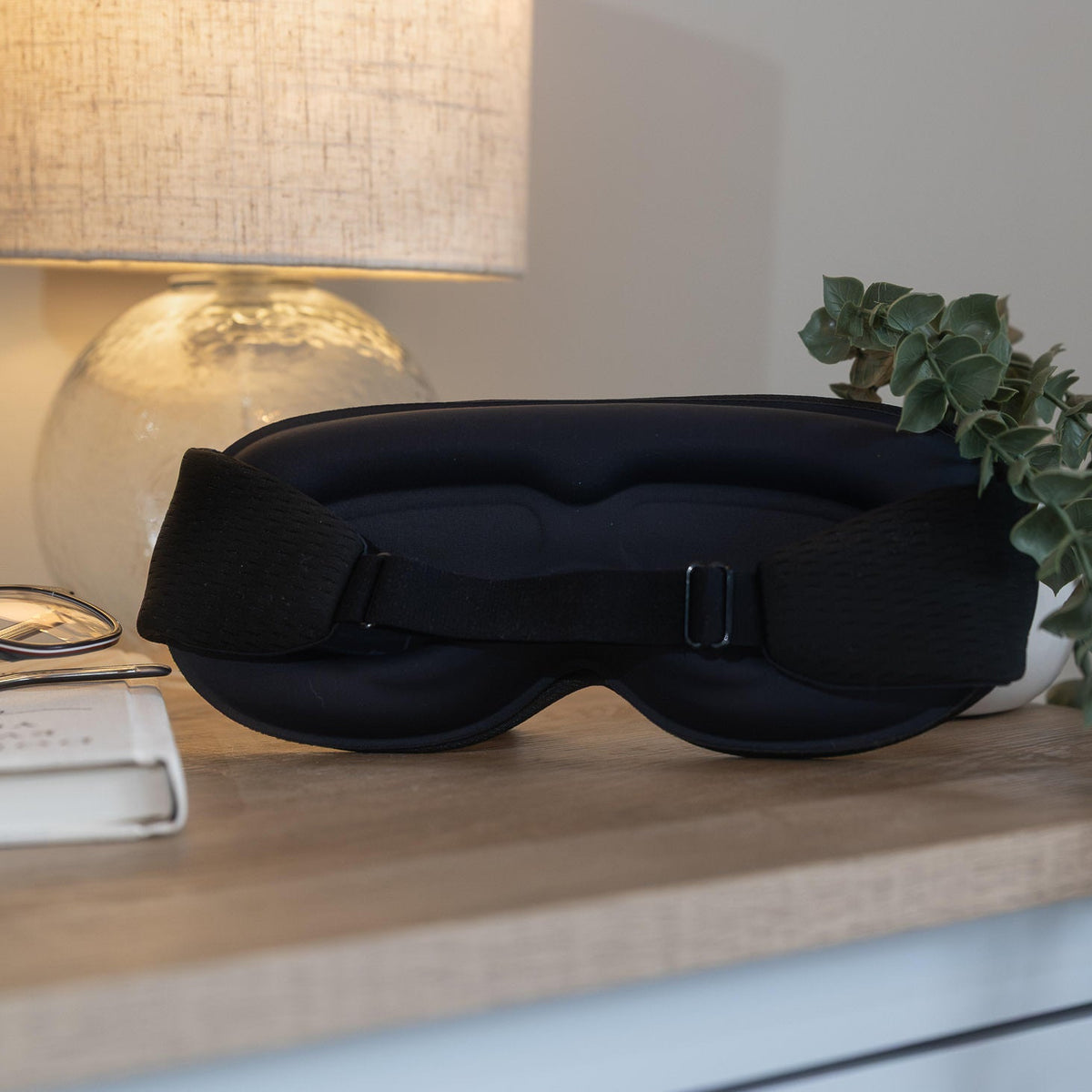
The good ones have contoured eye cups so nothing presses on your eyes, an adjustable strap, and electronics you can take out before washing.
Who is a Bluetooth sleep mask worth it for?
- Shift workers sleeping during the day. You need darkness and something to soften daytime noise at the same time. Our full guide on how to sleep during the day after a night shift covers the rest of the set-up.
- People who already fall asleep to audio. If you play white noise or a podcast every night anyway, a mask is far comfier than earbuds when you're lying on your side.
- Light sleepers. Light and sudden noise are the two things most likely to wake you. This deals with both.
- Partners of snorers. A steady sound right by your ears can make snoring much less noticeable, without disturbing the person next to you.
- Travellers, and anyone who rests on breaks. One small thing in your bag gives you darkness and sound on trains, planes and in unfamiliar rooms.
Who should skip one?
We'd rather you bought the right thing than the wrong one, so here's who we'd steer away:
- People who can't stand anything on their face. Try a plain, lightweight mask first, like the silk one in our Clocked Off set.
- People who need silence. A Bluetooth mask plays sound. It doesn't cancel noise. If you sleep best in total quiet, foam earplugs and a regular mask will suit you better.
- Very committed side sleepers on firm pillows. The speakers are thin, but you'll notice them for the first few nights. Most people get used to it. A few don't.
Bluetooth sleep mask vs earbuds vs headphones vs a regular mask
| Option | Blocks light | Plays audio | Comfortable on your side | Nothing in your ears |
|---|---|---|---|---|
| Bluetooth sleep mask | Yes | Yes | Mostly | Yes |
| Regular sleep mask | Yes | No | Yes | Yes |
| Sleep earbuds | No | Yes | Varies | No |
| Over-ear headphones | No | Yes | No | Yes |
Do sleep masks actually help you sleep?
When it comes to light, the evidence is encouraging. A sleep mask can help because it removes the light that tells your body it's time to be awake. NHS staff guidance for night workers lists eye masks alongside blackout blinds as a way to get the room dark. And a 2025 randomised trial in intensive care found that patients who wore eye masks reported better sleep quality.
Sound is more of a mixed picture. Steady background sound like white noise is often suggested for shift workers to help mask disturbances, and plenty of people find it soothing. Keep it gentle and it can take the edge off a noisy street.
What to look for in a Bluetooth sleep mask
- Contoured eye cups. They leave space around your eyes, which feels better and is kinder to lash extensions.
- Thin, flat speakers. Bulky ones are what make side sleeping uncomfortable.
- Removable electronics. If you're wearing it every day, it'll need washing. Check the speakers come out.
- An adjustable strap. Everyone's ears sit a little differently compared with their eyes, so you need to be able to fine-tune the fit.
- Simple controls. You want to pause or turn it down by touch, half asleep, without hunting for your phone.
- A battery that fits your routine. Check how long it lasts on a charge, and work charging into your day.
Our pick: Drift Away Bluetooth Sleep Mask (£34.99)
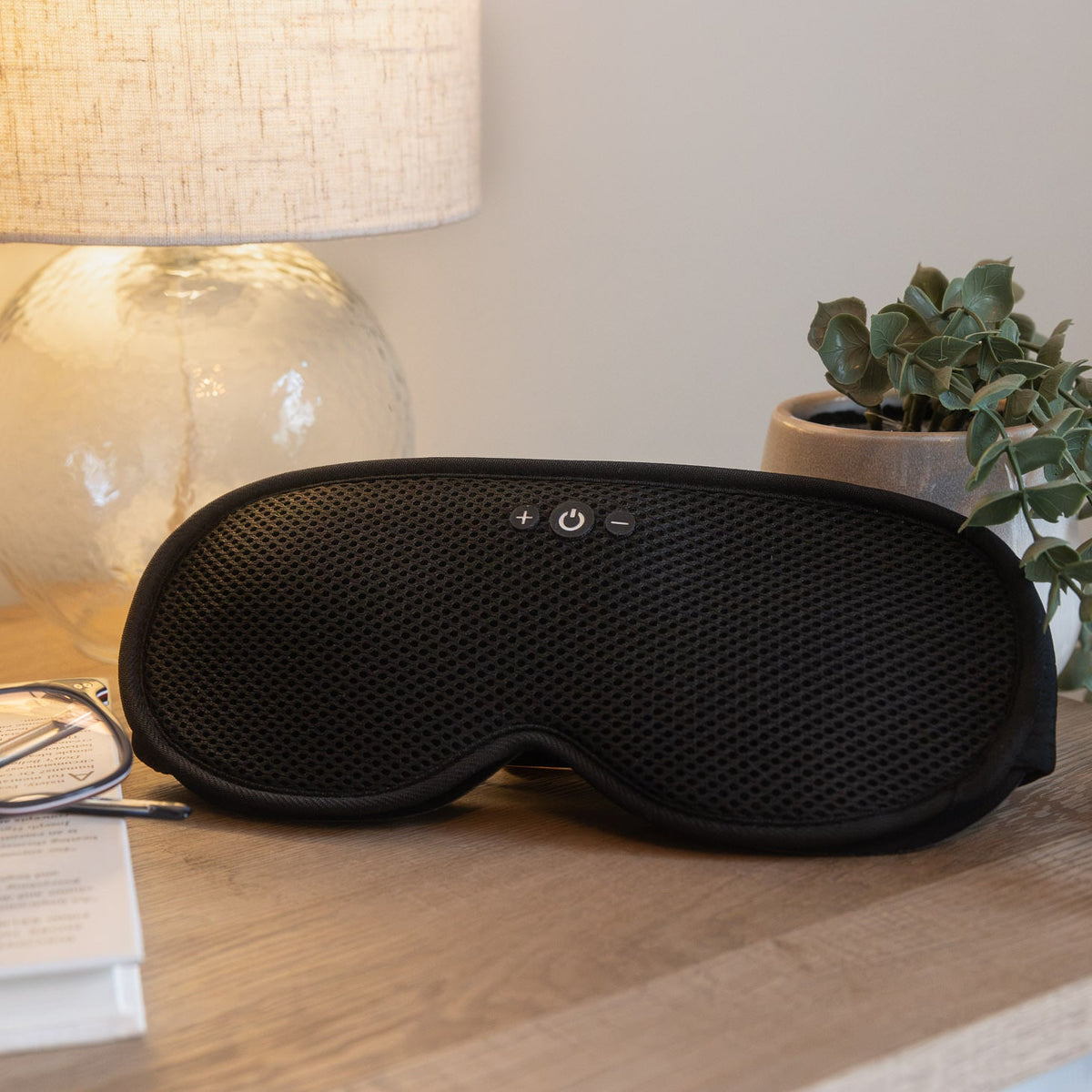
Everything at Dream & Drift is built around people who sleep at odd hours, and Drift Away is the product we reach for most ourselves. It has full-coverage contoured eye cups with deep cushioning to take pressure off your eyes, a shaped nose area that keeps light from creeping in, ultra-thin stereo speakers built into the sides, controls on the mask itself and an adjustable head strap. The electronics come out, so the mask can go in the wash.
Best for: daytime sleepers who already like falling asleep to sound.
Worth knowing: if your ears sit a bit lower than average, angle the strap slightly downwards to line the speakers up. Side sleepers will feel the speakers at first. And remember, it masks noise with sound. It won't cancel it.
Prices correct at the time of writing.
How to get the most from a Bluetooth sleep mask
- Keep the volume low. You only need enough to soften the background. Quieter is kinder to your ears over hours of wear.
- Set a sleep timer. Most phones and audio apps can stop playback after a set time, so it's not running all day.
- Choose calm audio. White noise, rain, or a podcast you've heard before. Something gripping and new will keep your brain listening.
- Charge it at the same time every day. Make it part of your routine and it'll be ready when you are.
- Pair it with blackout blinds. The mask covers the gaps, but a darker room still helps the moment you take it off.
What if it feels strange at first?
It probably will, and that's normal. Most of us aren't used to wearing anything on our face in bed, let alone something with speakers in it. Give it a week before you decide.
A few things that help in those first few days: wear it for 20 minutes on the sofa before bed so it stops feeling new, loosen the strap a touch more than you think you need, and start with audio you already know well. If you wake up having pushed it off in the night, don't worry. That happens to plenty of people early on, and it usually settles as your body gets used to it.
So, is a Bluetooth sleep mask worth it?
If you need darkness at odd hours and you already sleep with something playing, yes. It's one of the simplest changes you can make to daytime sleep. If you prefer silence, or you just can't get on with anything on your face, save your money and try earplugs or a lightweight silk mask instead. We'd much rather you ended up with something you'll actually use.
Frequently asked questions
Are Bluetooth sleep masks comfortable for side sleepers?
Mostly, yes. The speakers are thin and flat, but most side sleepers notice them for the first few nights before they get used to them. A softer pillow helps.
Do Bluetooth sleep masks block out noise?
Not in the way noise-cancelling headphones do. They play sound close to your ears, such as white noise, which can soften and mask background noise rather than remove it.
Can you wash a Bluetooth sleep mask?
The good ones, including Drift Away, have removable electronics, so you can take the speakers out and wash the mask itself. Always follow the care instructions.
Are Bluetooth sleep masks good for shift workers?
Yes. Shift workers often need to sleep in daylight while the world outside is noisy. A Bluetooth sleep mask blocks light and plays soothing sound in one, without earbuds in bed.
Does Dream & Drift sell a Bluetooth sleep mask?
Yes. Our Drift Away Bluetooth Sleep Mask has contoured eye cups, ultra-thin built-in speakers, an adjustable strap and removable electronics for washing. It was designed with shift workers and daytime sleepers in mind.
About the authors
James and Larissa are the founders of Dream & Drift. After ten years of shift work in the emergency services, they built Dream and Drift around practical sleep essentials for people whose rest doesn't always happen at night. Better rest, on your terms.
Dream & Drift products are general sleep accessories and are not intended to diagnose, treat or prevent any medical condition. If sleep problems persist, speak to your GP.


Leave a comment
This site is protected by hCaptcha and the hCaptcha Privacy Policy and Terms of Service apply.