
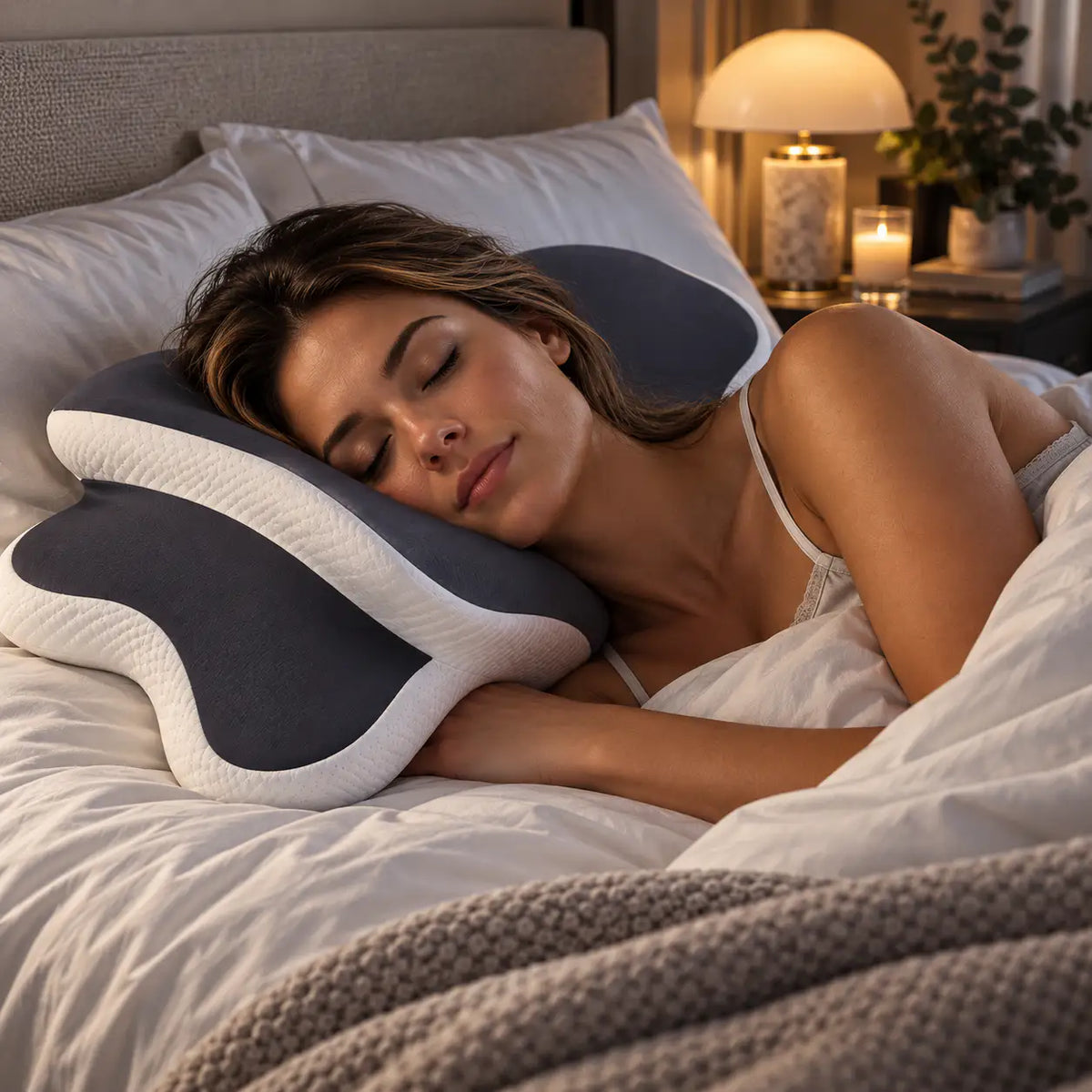
Quick answer: The best pillow for neck pain is one that keeps your head and neck roughly in line with the rest of your spine in the position you actually sleep in. That usually means a lower, firmer pillow if you sleep on your back, a higher one that fills the gap between your ear and shoulder if you sleep on your side, and a very flat pillow (or none) if you sleep on your front. Research suggests the shape and height of a pillow matter more for neck alignment than what it's filled with. A contoured memory foam pillow with two heights, like the Dream & Drift Deep Rest pillow, lets you choose the side that suits you. For back pain, a pillow between your knees (side sleepers) or under your knees (back sleepers) can take some strain off. If neck or back pain lasts more than a few weeks, or comes with pins and needles or numbness, see your GP.
We're James and Larissa, and after ten years of shift work in the emergency services, we've slept in some strange places: sofas, car seats on a break, the spare room at 9am because it's the darkest one in the house. A stiff neck came with the job more often than we'd like. When we started Dream & Drift, a proper pillow was high on the list, and the Deep Rest is the one James now uses every night. He's been on it for about three weeks, and his neck has felt far better for it. That's one person's experience rather than a promise, but it's why we wanted to write this guide properly.
Can your pillow cause neck pain?
It can certainly play a part. The NHS lists sleeping with your neck in an awkward position as one of the common causes of neck pain, alongside poor posture, a pinched nerve and injuries like whiplash.
Think about what happens over a seven or eight hour sleep. If your pillow is too high, your head is pushed up and your neck bends one way for hours. Too low or too squashed, and it drops the other way. Either way, the muscles and joints in your neck are held at an angle they don't love, and you feel it when you lift your head off the pillow.
Old pillows are a common culprit. A pillow that's gone flat and lumpy won't hold the same shape all night, however much you fold and punch it.
What type of pillow is best for neck pain?
There isn't one perfect pillow for everyone, which is frustrating to hear but useful to know. A 2021 systematic review and meta-analysis looked at 35 studies on pillow design and neck pain. The researchers concluded that pillow shape and height seem to affect how your neck lines up more than the filling does. Some designs were linked with less neck pain and morning stiffness in people with ongoing neck pain, but the overall evidence was limited, with only nine studies rated as high quality.
So rather than chasing a "miracle" material, look for three things:
- The right height for how you sleep. This matters most.
- Support that holds its shape. Memory foam, latex and similar fills keep their height through the night better than a pillow that slowly flattens.
- A shape that supports your neck, not just your head. Contoured pillows have a raised edge that fills the curve of your neck.
The NHS self-help advice for neck pain is to use a low, firm pillow, and NHS physiotherapy guidance from Berkshire suggests a firm pillow you can adjust. That's a good starting point for most people.
Should a pillow for neck pain be high or low?
It depends on how you sleep. Here's a simple guide, based on advice from physiotherapists at Spine-health.
| How you sleep | Pillow height | What to aim for | Extra tip |
|---|---|---|---|
| On your back | Low to medium | Head not tipped forward; a little support under the curve of the neck | A pillow under your knees can ease your lower back |
| On your side | Medium to high | Head level with your spine, filling the gap between ear and shoulder | A pillow between your knees keeps your hips and lower back level |
| On your front | Very low or none | As little twist and lift as possible | Try training yourself towards side sleeping, as front sleeping turns your neck for hours |
| A bit of everything | Adjustable or dual height | A pillow you can switch around as your position changes | Keep a lower side towards you for back sleeping and turn it for side sleeping |
A quick check: lie in your usual position and ask someone to look at you from behind or the side. Your nose should line up roughly with the middle of your chest, and your neck shouldn't be bending up or down.
Is a memory foam pillow good for neck pain?
For a lot of people, yes, mainly because of how it behaves rather than anything magic in the foam. Memory foam softens slightly with warmth and moulds to the shape of your head and neck, then holds that shape instead of collapsing. That means the height you choose at bedtime is closer to the height you've still got at 4am.
Contoured memory foam pillows add a raised neck roll that fills the gap under your neck, which is useful for back and side sleepers.
Worth knowing: memory foam feels firmer than a feather or fibre pillow, and it can take a few nights to get used to. Some people find it warmer too, though a breathable cover helps. If you love sinking into a squishy pillow, it'll feel different at first.
What pillow is best for back pain?
Your head pillow mainly affects your neck and upper back. For lower back pain, the bigger win is often a second pillow:
- Side sleepers: a pillow between your knees stops your top leg dragging your hips and lower back out of line.
- Back sleepers: a pillow under your knees can take pressure off your lower back.
- Front sleepers: a thin pillow under your hips and stomach can reduce how much your lower back arches.
Beyond that, the NHS advice on back pain is to stay as active as you can, avoid long periods in bed, and try gentle exercises and stretches. That can feel counterintuitive when you're sore and tired after a run of shifts, but resting completely tends to slow things down.
Why do shift workers wake up with neck pain?
A few reasons that come up again and again:
- Naps in the car or the staff room, with your head tipped to one side.
- Falling asleep on the sofa after a night shift instead of going up to bed.
- Long hours driving, at a desk or on your feet, so your neck's already tired before you lie down.
- Sleeping in a different room or bed during the day to escape the light and noise, with whatever pillow happens to be there.
You can't change all of that, but you can make sure the bed you do sleep in sets your neck up well. If you're also fighting daylight and noise, our guide to sleeping after a night shift and our post on making your bedroom dark enough for daytime sleep cover the rest of the room.
Our Deep Rest Adjustable Memory Foam Pillow
Here at Dream and Drift, this is the pillow we'd point you to if your neck has been giving you trouble.
Deep Rest Adjustable Memory Foam Pillow (£39.99)
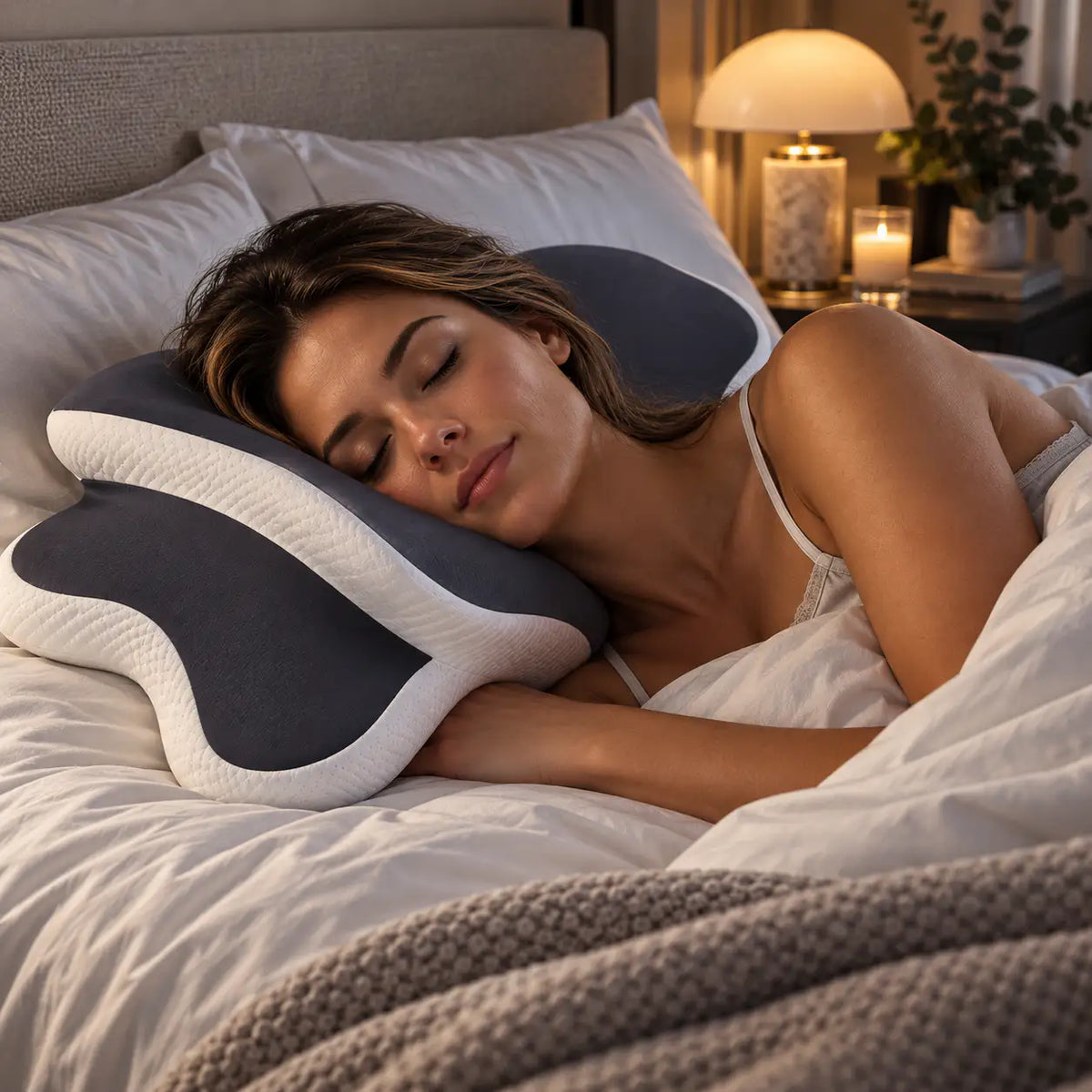
The Deep Rest pillow is a contoured, slow-rebound memory foam pillow with a dual-height design: a lower side and a higher side, so you can turn it to whichever suits the way you sleep. Its sculpted shape gives your head, neck and shoulders their own areas to settle into, and it's designed for back, side and stomach sleeping.
In practice, that means back sleepers can use the lower edge under their neck, and side sleepers can turn it round to the higher edge to fill the gap above the shoulder. If you move around in the night, you've got both in one pillow.

Best for: anyone who wakes with a stiff neck, back and side sleepers, and people who want a pillow that holds its height all night.
Worth knowing: it's firmer than a traditional pillow, so give it a week or two to get used to. Stomach sleepers will usually find the lower side more comfortable. It's a comfort and support product, not a treatment, so if your pain doesn't settle, please see your GP or a physiotherapist.
Prices correct at the time of writing.
How long does it take to get used to a new pillow?
Usually somewhere between a few nights and a couple of weeks. Your neck has got used to its old position, even if that position wasn't doing it any favours, so a new pillow can feel odd at first. Give it a fair go before deciding. If it's still uncomfortable after a couple of weeks, try the other height or a different sleeping position before giving up on it.
A few other things that help alongside a better pillow:
- Replace pillows that have gone flat or lumpy.
- Avoid reading or scrolling in bed with your chin on your chest.
- Keep moving during the day. Gentle neck and shoulder stretches can help, and the NHS suggests heat or cold packs wrapped in a tea towel for short spells.
When should you see a GP about neck or back pain?
Most neck pain settles within a few weeks. The NHS suggests seeing your GP if:
- your neck pain or stiffness hasn't gone after a few weeks
- painkillers aren't helping, or you're worried about the pain
- you've got pins and needles, numbness or a cold arm
- back pain hasn't improved after a few weeks, stops you doing everyday things, or is worse at night
For back pain, the NHS says to call 999 or go to A&E if you have numbness, tingling or weakness in both legs, loss of feeling around your genitals or bottom, changes to bladder or bowel control, chest pain, or pain after a serious accident. Please don't sit on those.
A good pillow can make your nights more comfortable. It's not a substitute for getting persistent pain looked at, and you deserve to have it properly checked.
Frequently asked questions
What type of pillow is best for neck pain?
One that keeps your head and neck in line with your spine in the position you sleep in. Research suggests a pillow's shape and height matter more than its filling. A firm, supportive pillow with an adjustable or dual height, such as a contoured memory foam pillow, suits many people.
Should I use a high or low pillow for neck pain?
Back sleepers usually do best with a low to medium pillow, side sleepers with a medium to high pillow that fills the gap between ear and shoulder, and front sleepers with a very flat pillow or none. The NHS suggests a low, firm pillow for neck pain.
Can a bad pillow cause neck pain?
It can contribute. Sleeping with your neck in an awkward position is one of the common causes of neck pain listed by the NHS, and a pillow that's too high, too low or worn out can hold your neck at an angle for hours.
What pillow helps with lower back pain?
Often a second pillow: between your knees if you sleep on your side, or under your knees if you sleep on your back. The NHS also advises staying active and avoiding long periods in bed.
How long does it take to get used to a memory foam pillow?
Usually a few nights to a couple of weeks. Memory foam feels firmer than a traditional pillow, so give it a fair try and experiment with the height before deciding.
Does Dream & Drift sell a pillow for neck pain?
Yes. We sell the Deep Rest Adjustable Memory Foam Pillow, a contoured memory foam pillow with a lower and higher side for back, side and stomach sleepers. It's a comfort product, not a treatment, so see your GP if pain persists.
About the authors
James and Larissa are the founders of Dream & Drift. After ten years of shift work in the emergency services, they built Dream and Drift around practical sleep essentials for people whose rest doesn't always happen at night. Better rest, on your terms.
Dream & Drift products are general sleep accessories and are not intended to diagnose, treat or prevent any medical condition. If sleep problems persist, speak to your GP.


Leave a comment
This site is protected by hCaptcha and the hCaptcha Privacy Policy and Terms of Service apply.